

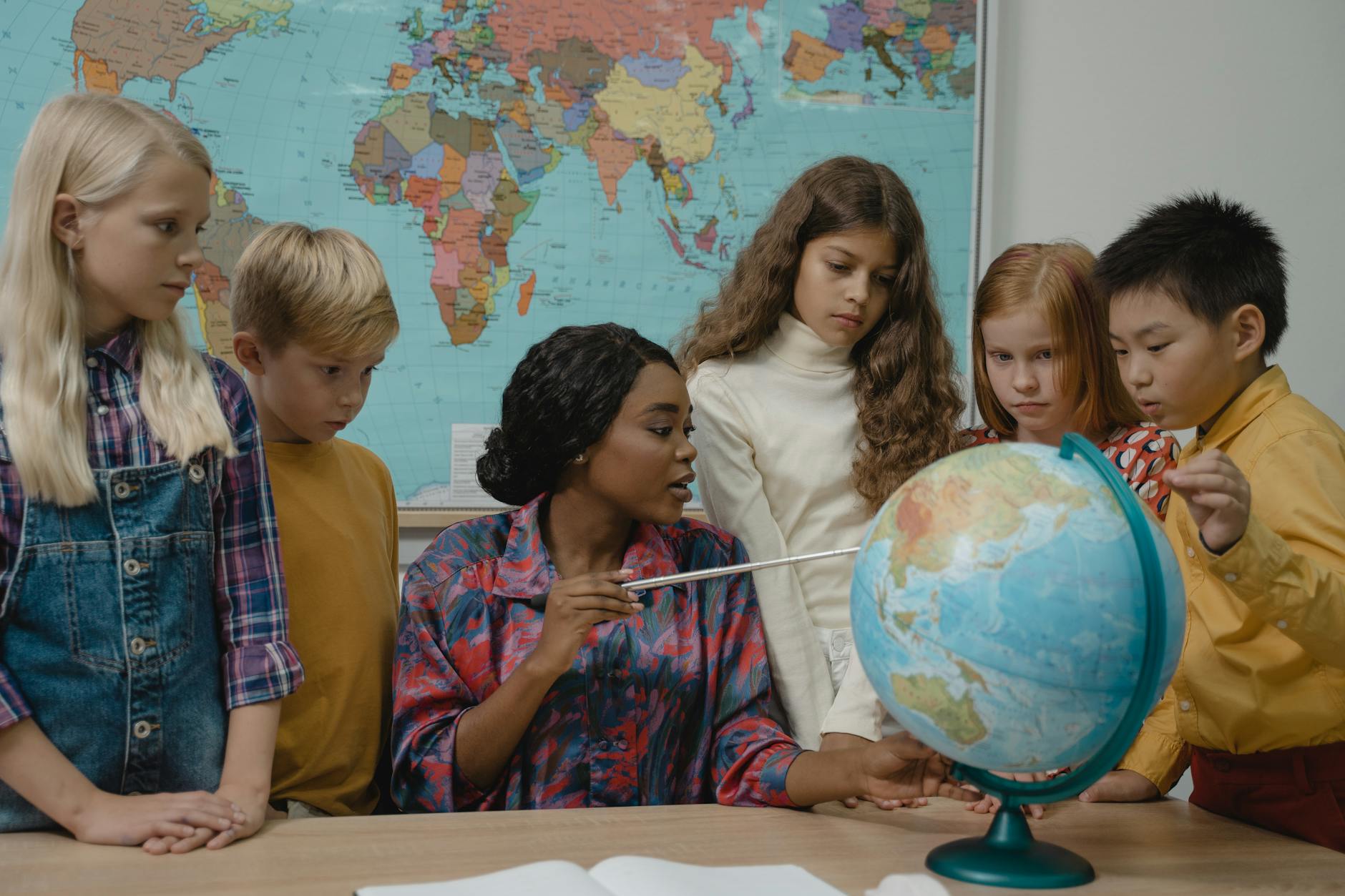
Who am I?
It may be one of the simplest questions we can ask — and one of the hardest to answer.
You could respond with your name.
Your age.
Your occupation.
Your nationality.
Your culture.
Your religion.
Your relationships.
Your achievements.
Your personality.
But if all of those things changed, would you still be you?
Throughout our lives, we build layers of identity that help us understand ourselves and communicate who we are to the world. Some are inherited. Some are chosen. Some emerge through experience. Others are placed upon us by society before we’re old enough to question them.
Identity gives us individuality.
It gives us belonging.
It helps us navigate an enormously complicated world.
But identity can also become a source of division when the labels that describe us begin separating us from people carrying different labels.
Perhaps understanding who we are requires looking at both sides of this remarkable human experience:
What makes each of us unique — and what connects all of us together?
Humanity’s Journey From Survival to Identity
Imagine looking at humanity not as billions of separate individuals, but as one evolving story.
For most of human history, survival was the immediate priority.
Our ancestors needed food.
Water.
Shelter.
Safety.
Community.
They learned to hunt, gather, build, communicate and cooperate.
Once basic survival became more secure, humans had greater opportunities to create.
We painted.
Carved.
Sang.
Danced.
Built.
Invented.
Told stories.
Made tools.
Created clothing and jewellery.
Eventually, communities expanded into settlements, cities and civilisations. Groups developed languages, traditions, religions, political systems and cultural identities.
Humans began asking not only:
“How do we survive?”
but:
“Who are we?”
Within my Rainbow Bridge of Life, I describe this progression symbolically through the first three stages:
Survival — To Have
Creativity — To Do
Identity — To Show
These stages can describe an individual’s development, but I also find it interesting to consider them as a metaphor for humanity’s collective journey.
We have become extraordinarily capable of having, doing and showing.
Perhaps one of the questions facing us now is:
What comes next?
Understanding Individual Identity
Identity begins developing long before we consciously think about it.
As children, we learn our name, family, language and culture.
Gradually, we discover preferences.
We find things we enjoy.
We develop talents.
We notice similarities and differences between ourselves and others.
Then adolescence often intensifies the question:
“Who am I?”
Clothing, music, friendship groups, interests, appearance, beliefs and aspirations can all become ways of experimenting with identity.
This isn’t necessarily superficial.
Self-expression is an important part of human development.
Our differences bring colour to humanity.
Imagine a world in which everyone had identical personalities, interests, appearances and ideas.
There would be little creativity.
Little discovery.
Little surprise.
Individuality is not something we need to overcome.
It is something worth celebrating.
The Self Is Always Changing
One of the fascinating things about identity is that it rarely remains fixed.
Think about who you were ten years ago.
Do you believe exactly the same things?
Do you value the same things?
Are your priorities identical?
Probably not.
We are continually shaped by experience.
Relationships change us.
Parenthood can change us.
Loss changes us.
Education changes us.
Travel changes us.
Success and failure change us.
Age changes us.
Sometimes we consciously choose these changes.
Other times life changes around us and we adapt.
Perhaps the self is therefore not a finished object.
Perhaps identity is better understood as an ongoing story.
You remain recognisably you, yet each new chapter adds something to the person telling the story.
Identity and the Ego
Identity also has an important relationship with what we commonly call the ego.
The ego helps us distinguish between self and other.
It tells us:
This is me.
This belongs to me.
This is what I believe.
This is what I want.
A healthy sense of self allows us to establish boundaries, develop independence and express individuality.
Problems can arise, however, when identity becomes something we constantly need to defend.
We may begin believing that another person’s difference somehow threatens our own identity.
Their religion threatens mine.
Their culture threatens mine.
Their success diminishes mine.
Their opinion invalidates mine.
Their way of life challenges my own.
At that point, identity stops simply telling us who we are.
It begins telling us who we are not.
And that distinction can become a powerful source of division.
The Many Groups We Belong To
Human beings naturally form groups.
Families.
Friendship circles.
Communities.
Cultures.
Religions.
Professions.
Nations.
Political movements.
Sporting teams.
Online communities.
Groups provide belonging and shared meaning.
But something interesting happens when we zoom outward.
A person might say:
I am from this town.
Zoom out.
I am Australian.
Zoom out again.
I am human.
Again.
I am an inhabitant of Earth.
Again.
I am part of life.
Each identity can be true simultaneously.
The smaller identity doesn’t necessarily need to disappear when we recognise the larger one.
Perhaps our challenge is learning how to hold multiple identities without turning them into walls.
From Identity to Relationships
The Rainbow Bridge continues beyond Identity.
After To Show comes:
Relationships — To Serve
Then:
Connectedness — To Support
This transition is important.
Once we have developed a sense of who we are, life begins asking us to understand ourselves in relationship to others.
We learn that independence is only part of the human story.
We depend upon farmers for food.
Builders for shelter.
Teachers for education.
Healthcare workers when we become ill.
Friends and family for emotional support.
Countless people we will never meet maintain the infrastructure that makes modern life possible.
Even the most independent person remains embedded within an enormous network of relationships.
This is where identity can begin expanding.
Instead of asking only:
“Who am I?”
we begin asking:
“Who am I in relation to you?”
A Shared Human Identity
Beneath our enormous cultural diversity are experiences almost every human being can recognise.
We know hunger.
Thirst.
Pain.
Fear.
Joy.
Attachment.
Loss.
Curiosity.
The need for safety.
The desire to belong.
We may express these experiences differently, but their familiarity gives us common ground.
The same is true of many values.
Across cultures, people may interpret them differently, yet concepts such as:
Respect
Honesty
Responsibility
Kindness
Courage
Patience
Generosity
Integrity
Gratitude
and Compassion
are recognisable throughout much of human life.
Our differences matter.
But so do our similarities.
A shared human identity doesn’t require erasing culture, religion, nationality or individuality.
It simply adds another layer:
Before all of these things, we are human beings sharing one planet.
Unity Does Not Require Sameness
This distinction is important.
Oneness does not mean sameness.
A forest does not become harmonious because every tree becomes identical.
An ecosystem thrives through diversity.
Different organisms occupy different niches.
They interact.
Compete.
Cooperate.
Adapt.
And together they create something larger than any individual organism.
Humanity can perhaps learn something from this.
Unity doesn’t require everyone to share the same beliefs.
It doesn’t require one religion.
One culture.
One political system.
One philosophy.
Or one way of living.
Unity can mean recognising that disagreement does not remove another person’s humanity.
We can challenge ideas without dehumanising people.
We can preserve cultural traditions while remaining curious about others.
We can disagree strongly and still recognise dignity.
Perhaps maturity — individually and collectively — means becoming secure enough in our own identity that difference no longer feels automatically threatening.
Social Media and the Performance of Identity
The digital world has made this challenge particularly visible.
Social media gives us extraordinary opportunities to communicate, learn and connect.
But it also encourages us to continually display identity.
Our opinions become public.
Our lifestyles become visible.
Our achievements become measurable.
Our appearance becomes comparable.
And disagreement can become performance.
It is easy to forget that behind a username is another human being carrying an entire lifetime of experiences we cannot see.
Before responding angrily to someone online, perhaps we could ask:
Am I trying to understand — or am I trying to win?
Not every disagreement will be resolved.
Nor should harmful behaviour simply be ignored.
But curiosity can sometimes accomplish what hostility cannot.
What Might Oneness Look Like?
Oneness can sound like an abstract spiritual idea.
But it can also be remarkably practical.
It might look like neighbours from different cultures sharing a meal.
Friends creating a safe space where everyone can speak honestly.
An eco-community sharing resources and caring for the surrounding environment.
A workplace where people with different backgrounds contribute different strengths toward a common goal.
An interfaith group discussing differences while discovering shared values.
A community helping someone through illness.
Older generations teaching younger people.
People gathering for art, music, gardening, food and conversation.
These actions don’t eliminate individuality.
They create connection between individuals.
And perhaps that is what Oneness actually requires.
Not uniformity.
Relationship.
What Do We Know We Share?
If we strip away every social label for a moment, some basic facts remain.
We live on Earth.
Our bodies require suitable food, water and environmental conditions.
We depend upon functioning ecosystems.
We experience the rhythms of day and night.
We live beneath the same Sun.
We participate in the same biosphere.
The atoms making up our bodies belong to the same physical Universe.
Whatever our philosophies or beliefs about life’s ultimate meaning, we share this physical reality.
We are participants in Earth’s living systems.
That alone gives us common ground.
Nature Does Not Recognise Our Borders
A river does not stop flowing because humans drew a national boundary.
Air circulates across countries.
Migrating animals cross political borders.
Oceans connect continents.
Climate systems operate at planetary scales.
Nature continually reminds us that many of the divisions humans create are meaningful primarily to humans.
That doesn’t make nations or cultures meaningless.
They organise societies and carry history, identity and belonging.
But they exist inside something larger.
Every nation exists on Earth.
Every culture belongs to humanity.
Every human belongs to life.
And every living system depends upon conditions that extend far beyond the individual.
From Global Identity to Global Responsibility
Recognising a shared identity also creates responsibility.
If we truly see ourselves as participants in one interconnected human and ecological system, then another person’s suffering becomes harder to dismiss as completely unrelated to us.
Environmental damage becomes more than somebody else’s problem.
Poverty becomes more than an abstract statistic.
Future generations become part of the conversation.
This doesn’t mean any individual can solve humanity’s problems.
None of us can.
But each of us influences a small part of the network.
How we treat people matters.
What we consume matters.
What we teach children matters.
How we participate in our communities matters.
How willing we are to listen matters.
Small actions may seem insignificant when compared with eight billion people.
But humanity is made from those individual actions.
Wisdom, Beauty and Love
Within The Earth & Body Connection, I often return to three qualities:
Wisdom. Beauty. Love.
Wisdom helps us understand.
Beauty gives our individuality expression.
Love connects us beyond ourselves.
Perhaps these qualities offer another way of thinking about identity.
Your individuality brings something unique into the world.
Your experiences can become wisdom.
Your creativity can produce beauty.
Your relationships can express love.
Identity therefore doesn’t need to disappear as we move toward Oneness.
It can become our contribution to it.
Imagine humanity as an enormous mosaic.
Every individual is a different piece.
If every piece became identical, the picture would disappear.
The beauty exists precisely because each piece is different — while still belonging to the whole.
So, Who Am I?
Perhaps there isn’t one answer.
I am an individual.
I am a collection of experiences.
I am a body.
I am a mind.
I am part of a family.
I am part of a community.
I am shaped by culture and history.
I am an inhabitant of Earth.
I am one expression of humanity.
And I am part of a Universe far greater than myself.
All of these statements can coexist.
The journey of identity may therefore not be about choosing between individuality and Oneness.
It may be about learning how they belong together.
First, we discover:
I am.
Then:
You are.
Eventually:
We are.
And perhaps, beneath all the extraordinary diversity of human identity, there is one final word broad enough to hold us all:
Leave a Reply